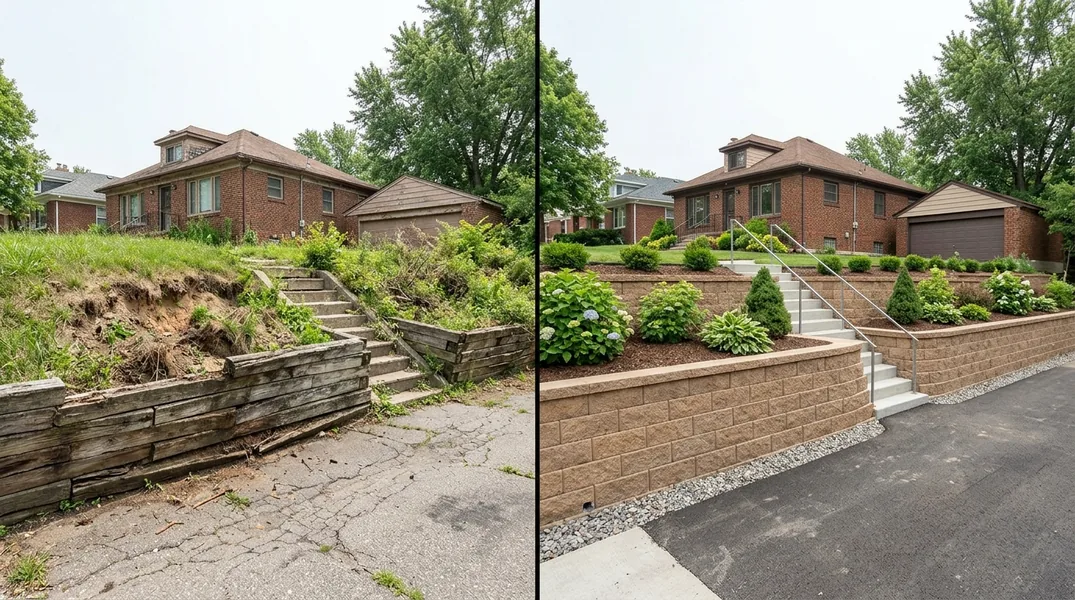
Signs Your Retaining Wall Needs Attention
A leaning retaining wall is more than an eyesore. It's a warning sign that structural failure may be imminent. If you've noticed your wall tilting away from the soil it's meant to hold back, or if it's leaning inward toward your property, you need to act fast. The longer you wait, the more expensive the problem becomes.
Common warning signs include visible cracks running horizontally or diagonally across the wall surface, water seeping or pooling at the base, and soil erosion behind the wall. You might also notice the wall bowing outward or sections separating from one another. In Detroit homes, where freeze-thaw cycles are common, these issues develop faster than in milder climates. The repeated expansion and contraction of soil and concrete accelerates deterioration.
Don't ignore minor tilting or small cracks. These problems compound over time. Water infiltration, frost heave, and soil pressure all work together to destabilize the structure. The difference between a simple Retaining Wall Repair and a complete Retaining Wall Replacement often comes down to how quickly you address the initial damage.
What Causes a Retaining Wall to Lean
Understanding why your wall is leaning helps you make the right repair decision. Poor drainage is the leading culprit. When water accumulates behind the wall, it increases hydrostatic pressure against the structure. This pressure pushes the wall forward, causing it to tilt. In Detroit's climate, where spring snowmelt and heavy rains are frequent, drainage problems develop quickly if the wall wasn't installed with proper backfill and drainage systems.
Inadequate foundation or installation is another major cause. If the wall was built on unstable soil, without proper compaction, or without adequate footer depth, it will shift over time. Roots from nearby trees can also destabilize the structure by creating voids in the soil or by applying directional pressure. Soil erosion, especially at the base of the wall, removes the support that keeps the structure upright and stable.
Freeze-thaw cycles unique to the Midwest accelerate leaning in Dearborn and surrounding areas. Water enters small cracks and expands as it freezes, widening those cracks and weakening the wall's integrity. This cycle repeats dozens of times each winter, gradually pushing the wall out of plumb. Age also plays a role. Older walls, especially those built decades ago without modern engineering standards, are more prone to leaning.
Repair Versus Replacement: How to Decide
The decision to repair or replace depends on the severity of the lean, the wall's age, and the underlying cause. If the wall is leaning less than one inch per ten feet of height and shows only minor cracking, repair is often possible. Retaining Wall Repair typically involves addressing drainage issues, injecting stabilizing compounds, installing tie-backs or anchors, and patching cracks. These solutions can extend the wall's life by many years if the damage isn't too advanced.
However, if the wall is leaning more than two inches per ten feet, showing large horizontal cracks, or if sections are actively moving, replacement is usually the safer and more cost-effective option. A severely compromised wall poses a safety risk to people and property. It may fail suddenly, especially after heavy rain or during winter thaw. Repairing a severely damaged wall can become a money pit, with repeated fixes needed as the underlying structural problems persist.
The wall's material also influences the decision. Concrete Retaining Walls can sometimes be repaired if the damage is localized, but if the concrete is spalling, crumbling, or heavily reinforced steel is exposed and corroded, replacement makes more sense. Your professional contractor can evaluate the specific conditions of your wall and recommend the most practical solution.
Retaining Wall Repair Near Me: When to Call a Professional
DIY fixes rarely work for leaning retaining walls. This isn't a project for homeowners to tackle alone. The wall is holding back tons of soil, and improper repair can lead to catastrophic failure. A professional contractor has the equipment, expertise, and insurance to handle the job safely and correctly. They'll conduct a thorough site assessment, determine the root cause of the lean, and develop a repair or replacement plan tailored to your situation.
In Livonia and throughout the Detroit area, professional contractors understand the region's soil conditions, drainage challenges, and frost dynamics. They know which repair methods work best in our climate and which materials will hold up to our winters. They'll also ensure proper permits are obtained and that work meets local building codes.
Detroit Retaining Wall specializes in diagnosing and fixing leaning walls. Our team can assess whether your wall needs repair or replacement and provide a clear plan forward. Call us at (313) 474-9126 to schedule an inspection, or visit our website to request a free estimate. We serve homeowners throughout the Detroit region and can help you avoid costly mistakes.
Retaining Wall Repair and Replacement Cost in Detroit: What to Budget
The cost of addressing a leaning retaining wall varies widely depending on the wall's size, material, severity of damage, and whether you choose repair or replacement. A simple repair involving drainage improvements and minor crack sealing might cost between $500 and $2,000. More involved repairs, such as installing tie-backs, injecting stabilizers, or rebuilding sections, typically range from $2,000 to $10,000.
Complete Retaining Wall Replacement is more expensive. A new wall of average size (20 to 30 feet long and 4 to 6 feet tall) can cost anywhere from $5,000 to $20,000 or more, depending on material choice and site conditions. Concrete walls cost more upfront than timber, but they last longer and require less maintenance. The pricing also depends on soil removal, proper drainage installation, and site preparation.
While replacement costs more initially, it's often the smarter investment for severely damaged walls. You get a new structure with a warranty, proper engineering, and many years of trouble-free service. Attempting to repair a wall that's beyond saving can lead to repeated expenses and eventual failure anyway. Contact Detroit Retaining Wall for a detailed cost estimate specific to your property. We'll help you understand the investment required and the long-term value of your choice.
Preventing Future Leaning: Maintenance and Best Practices
Once your wall is repaired or replaced, proper maintenance prevents future problems. Keep the area behind the wall clear of debris and ensure water drains away from the structure. If your wall has a drainage system, inspect it regularly to confirm it's functioning. Clear any blockages in drainage pipes or weep holes. In fall, remove leaves and vegetation that can trap moisture against the wall.
Monitor your wall seasonally, especially after heavy rain or during spring thaw. Look for new cracks, signs of movement, or changes in the lean. Early detection of problems allows for minor repairs before major damage occurs. If you're planning Retaining Wall Installation for a new project, invest in proper design and installation from the start. A well-built wall with adequate drainage, proper footer depth, and quality materials will serve you for decades without major issues.
Your retaining wall is an investment in your property's stability and value. Whether your wall needs repair or replacement, addressing the problem promptly protects your home and landscape. Contact Detroit Retaining Wall today at (313) 474-9126 or request a free estimate to discuss your options. We're here to help you make the right decision for your Detroit property.
Looking for a professional retaining wall contractor in Detroit? Detroit Retaining Wall responds fast for all your retaining wall needs.
Get a Free QuoteOur services: Retaining Wall Installation · Retaining Wall Repair · Retaining Wall Replacement