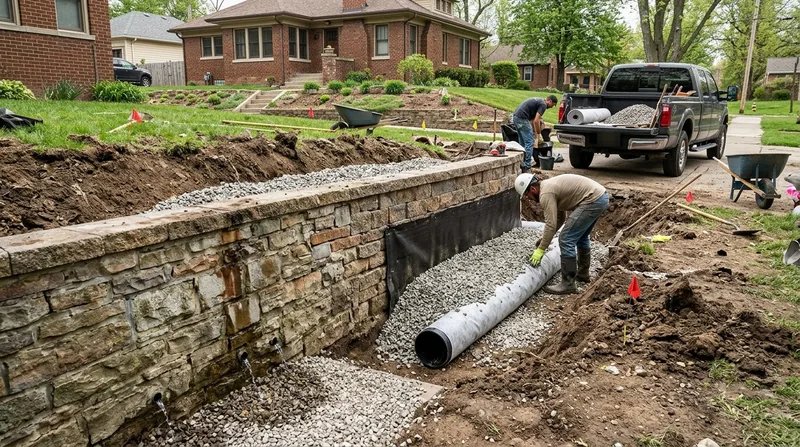




Retaining Wall Drainage in Detroit is not a luxury, it is the difference between a wall that holds for decades and one that fails in five years. Detroit sits on a flat glacial lake plain of dense, poorly drained clay, where the water table runs high near the Detroit River and the Rouge. When spring storms saturate the ground or winter freeze-thaw cycles push moisture through clay backfill, hydrostatic pressure builds behind your wall. Without proper drainage, that pressure cracks concrete, pushes over block, and topples aging timber and railroad tie walls. We install French drains, weep holes, gravel backfill, and waterproofing systems that relieve that pressure before it fails your wall. If your wall is already leaning, cracking, or weeping, drainage repair is often the first step to stopping further damage. Call us at (313) 474-9126 for a free estimate, or read on to understand why drainage matters so much in this climate.
Why Proper Drainage Fails Retaining Walls in Detroit
The Detroit area's clay-heavy soil and high water table create a perfect storm for retaining wall failure. Unlike sandy or well-drained soils, clay holds water like a sponge. When rain or snowmelt saturates the backfill behind your wall, that water has nowhere to go. Hydrostatic pressure builds, pushing the wall outward and downward. Freeze-thaw cycles make it worse: water freezes, expands, and heaves the soil against your wall. Without drainage, even a well-built wall will crack, lean, bow, or collapse within a few years. This is the number one cause of retaining wall failure in Detroit and the surrounding suburbs.
- We install perforated drain pipes along the base of your wall to intercept groundwater before it builds pressure.
- We drill weep holes through the wall face to let water escape and relieve hydrostatic pressure.
- We use gravel backfill instead of clay to allow water to flow freely down to the drain pipe.
- We apply waterproofing membranes on the wall face to shed surface water and prevent saturation.
- We slope the ground away from the wall and install surface drainage swales to direct runoff away from the backfill.
These methods work together to keep water moving through and away from your wall, not trapped behind it.
Key info: In Palmer Woods, Sherwood Forest, and Rosedale Park, we see brick Tudor Revivals and Colonials with sunken patios and raised planting beds held by poured concrete and CMU walls. After wet springs, these walls weep and lean because the original backfill was clay with no drainage. A proper drainage retrofit stops the damage and adds years to the wall's life.
For more on how walls fail and how to fix them, see our leaning and collapsed wall repair service.
How We Install Retaining Wall Drainage Systems in Detroit
Drainage installation depends on whether we are building a new wall, repairing an existing one, or retrofitting a failing wall. For new walls, we design the drainage system before we build, laying drain pipe and gravel backfill as we go. For existing walls, we may excavate behind the wall, install a drain pipe and waterproofing, and backfill with gravel. For failing walls, we assess the damage first, then decide whether drainage repair alone will stabilize it or if we need to rebuild sections. Every job is different, but the goal is always the same: move water away from the wall.
- We excavate the area behind and below the wall to expose the base and backfill.
- We lay perforated drain pipe along the footing, sloped toward a daylight outlet or sump.
- We backfill around the drain pipe with coarse gravel to allow water to flow freely.
- We install a geotextile filter fabric to prevent clay and silt from clogging the gravel.
- We apply waterproofing membrane to the wall face if it is exposed to heavy splash or seepage.
- We drill weep holes through the wall face at regular intervals to release trapped water.
- We slope the final grade away from the wall and compact the top layer to shed surface runoff.
The entire process ensures that water reaches the drain pipe, flows out of the system, and never builds pressure against your wall.
Local example: A homeowner in Dearborn had a 6-foot poured concrete wall holding a raised patio. After two wet springs, water was seeping through the wall and the patio was cracking. We excavated behind the wall, installed a French drain with gravel backfill, and drilled weep holes. The seepage stopped, and the wall has been dry and stable for three years.
If your wall is cracked or bowing, see our retaining wall repair service for a full assessment.
Drainage Methods and When to Use Each
| Approach | Description | Best For |
|---|---|---|
| French Drain | Perforated pipe laid at the base of the wall, wrapped in gravel and filter fabric, sloped to daylight or a sump pump. | New walls, major retrofits, areas with high water table or frequent saturation. |
| Weep Holes | Drilled through the wall face at regular intervals (typically 4 to 8 feet apart) to allow trapped water to escape. | Existing concrete and block walls where excavation is not feasible; quick relief of hydrostatic pressure. |
| Gravel Backfill | Replacing clay backfill with clean, coarse gravel and filter fabric to allow water to flow freely. | New walls and retrofits; essential in Detroit's clay soil where native backfill traps water. |
| Waterproofing Membrane | Applied to the wall face to shed surface water and prevent saturation of the wall material. | Walls exposed to heavy splash, spray, or seepage; concrete and poured walls in wet locations. |
| Surface Drainage | Sloped grade, swales, and gutters that direct surface runoff away from the wall and backfill. | All walls; prevents rainwater from concentrating at the top of the backfill and infiltrating downward. |
| Sump Pump System | A pit at the low end of the drain line with a pump to discharge water away from the wall when the water table is very high. | Properties near the Detroit River or Rouge River, or where daylight drainage is not possible. |
Most retaining walls in Detroit benefit from a combination of these methods. We assess your site, soil, and water conditions to design a system that works for your specific situation.
Retaining Wall Drainage Cost in Detroit: What to Expect
The cost of retaining wall drainage installation or repair depends on the size of the wall, the drainage method, whether we are retrofitting an existing wall or building new, and site access. A simple weep hole retrofit on a small wall may cost less than a full French drain installation on a large wall with excavation. Most drainage jobs in Detroit start at $2,500 for a modest retrofit and can range up to $8,000 or more for a full system on a large wall. Travel is included in our service area, and we provide a free estimate within 24 hours.
- Weep hole drilling and installation is typically the most affordable option, suitable for walls 4 to 6 feet tall with limited excavation.
- French drain systems with gravel backfill cost more because they require excavation, pipe, filter fabric, and labor, but they provide the best long-term protection.
- Retrofitting an existing wall costs more than building drainage into a new wall because we must excavate behind the wall and manage existing structures.
- Large walls, walls near structures or utilities, and properties with difficult access increase labor and material costs.
- Permitting may be required for walls above 4 feet; check with your local building department to confirm requirements for your property.
Get a free estimate by calling us at (313) 474-9126 or visiting our pricing page for more detail on what affects cost.
Retaining Wall Drainage Near Me: What Detroit Homeowners Should Know When Hiring
Choosing the right contractor for retaining wall drainage is as important as the drainage system itself. A poorly installed drain will fail, and a contractor who cuts corners on backfill or pipe placement will leave you with a wall that fails again in a few years. Before you hire, verify that your contractor is licensed and insured, ask for references from recent jobs in your area, and get at least two to three estimates so you understand the scope and cost. If your wall is near a property line or is in an HOA community, check local setback rules and HOA requirements before work begins. Many jurisdictions in the Detroit area require a permit for walls above 4 feet or when a wall supports a surcharge such as a driveway or structure. Always verify permit requirements with your local building department before hiring.
- Confirm that your contractor holds a valid Michigan contractor license and carries liability and workers compensation insurance.
- Ask for at least three references from homeowners in Detroit, Dearborn, Livonia, or nearby suburbs who have had drainage work done in the past two years.
- Get written estimates from multiple contractors that clearly describe the drainage method, materials, and labor scope so you can compare apples to apples.
- Check your local building department website or call to confirm whether a permit is required for your wall height and location.
- Ask about warranty or guarantee on the drainage system; reputable contractors stand behind their work for at least one to two years.
Contact us today to schedule an assessment of your wall and drainage needs.
Retaining Wall Drainage in Detroit: Pricing Guide
| Service | Price | Details |
|---|---|---|
| Weep Hole Retrofit | Starting at $2,500 | Drilling and installation of weep holes through existing wall face to relieve hydrostatic pressure on small to medium walls |
| French Drain Installation | Starting at $4,500 | Full perforated drain pipe, gravel backfill, filter fabric, and surface sloping for new walls or major retrofits with excavation required |
| Waterproofing and Drainage Combo | Starting at $5,500 | Membrane application, weep holes, gravel backfill, and surface drainage on concrete or poured walls exposed to heavy seepage |
| Sump Pump System | Starting at $3,500 | Drainage pit with pump discharge for properties near water table or where daylight drainage outlet is not feasible |
| Large Wall or Tiered System | On estimate | Multi-wall systems, walls over 8 feet, or complex site conditions require on-site assessment before pricing can be determined |
| Free Estimate | No charge | Response within 24 hours at (313) 474-9126; includes site visit, photo documentation, and written drainage recommendation |
Indicative pricing, the exact cost depends on square footage, finish, and site access. Free personalized estimate within 24h at (313) 474-9126.


