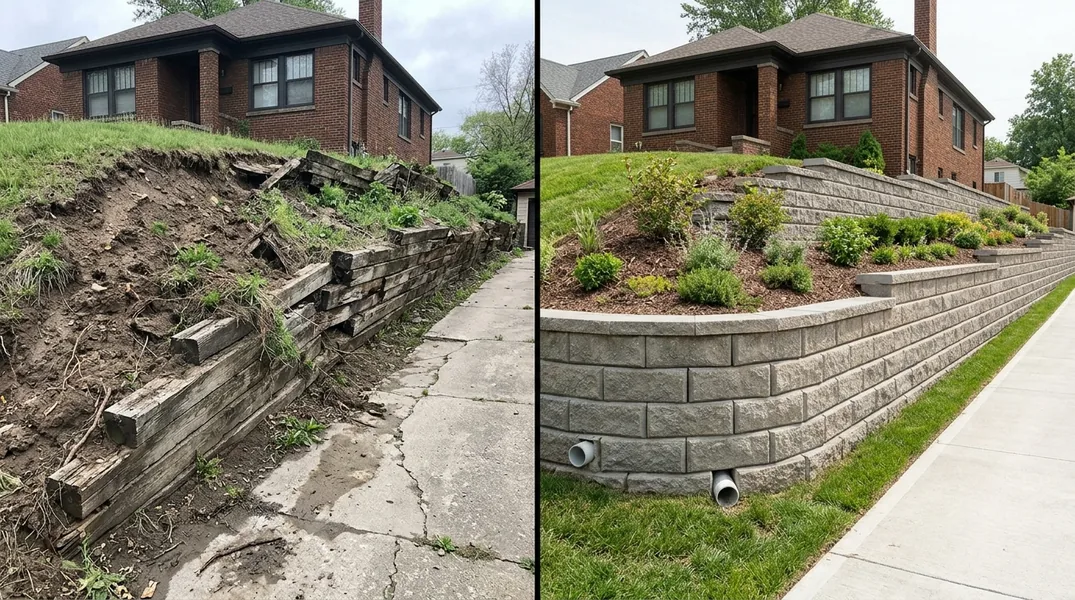
Why Spring Thaw Is a Retaining Wall's Worst Enemy
Every spring, homeowners across Detroit face a seasonal challenge that threatens the structural integrity of their retaining walls. The combination of melting snow, heavy spring rains, and freeze-thaw cycles creates the perfect storm for wall failure. When temperatures fluctuate above and below freezing, water trapped in the soil behind your wall expands and contracts, exerting tremendous force on the structure.
This process is relentless. Soil that is saturated with water becomes heavier and more unstable. The weight of wet soil increases significantly compared to dry soil, and this added pressure pushes against your retaining wall from behind. Over time, this seasonal stress weakens the wall's foundation and can cause visible cracks, bulging, or even complete failure. Many homeowners don't realize their wall is in danger until spring arrives and damage becomes obvious.
Understanding Hydrostatic Pressure and Its Impact on Retaining Walls
Hydrostatic pressure is one of the most destructive forces acting on retaining walls, yet many homeowners have never heard the term. Simply put, hydrostatic pressure is the force exerted by water and saturated soil pressing against the back of your wall. When soil becomes waterlogged, it doesn't just sit there passively. The water creates pressure that pushes outward in all directions, and your retaining wall bears the brunt of that force.
In Detroit, where spring weather brings consistent rainfall and snowmelt, hydrostatic pressure becomes a serious concern. A wall that was built without proper drainage systems will eventually succumb to this pressure. You might notice the wall leaning outward, soil seeping through cracks, or water pooling at the base. These are all signs that hydrostatic pressure is overwhelming your wall's ability to contain the soil behind it. The damage accelerates each year if left unaddressed, making early intervention critical.
The Role of Retaining Wall Drainage in Preventing Failure
Proper retaining wall drainage is the single most important factor in preventing wall failure, yet it's often overlooked during installation or maintenance. A well-designed drainage system redirects water away from the wall and prevents soil saturation. Without it, water accumulates behind the wall, creating the hydrostatic pressure that leads to structural failure.
There are several drainage solutions available, depending on your wall's design and the specific conditions of your property. The most common approach involves installing a drainage layer behind the wall using gravel or similar permeable material. This allows water to flow downward and away from the wall structure rather than pooling and creating pressure. Additionally, many professionals recommend installing a perforated pipe or other collection system to actively channel water away from the wall's base.
If your existing retaining wall shows signs of drainage failure, such as water staining, efflorescence (white mineral deposits), or soil erosion at the base, you may need Retaining Wall Repair to address the underlying drainage problem. Waiting only makes the situation worse, as water damage compounds over time.
French Drains: A Proven Solution for Retaining Wall Water Management
A retaining wall french drain is one of the most effective solutions for managing water behind your wall. Despite the fancy name, a French drain is actually a straightforward system consisting of a perforated pipe surrounded by gravel and landscape fabric. The pipe collects water that seeps through the soil and channels it away from the wall, preventing saturation and the hydrostatic pressure that causes failure.
French drains work by taking advantage of gravity and the principle of water seeking the path of least resistance. Water naturally migrates through soil toward the perforated pipe, which then carries it away to a safe discharge point. This system is particularly valuable in Detroit's climate, where spring thaw and heavy rains create conditions that would otherwise overwhelm a standard drainage setup. The beauty of a French drain is that it works passively, requiring no pumps or electricity, making it a reliable long-term solution.
Installing a French drain during initial Retaining Wall Installation is far more cost-effective than dealing with wall failure later. However, if your wall is already showing signs of drainage problems, a French drain can still be retrofitted, though the process is more complex. Either way, this investment pays for itself by extending the life of your wall and preventing expensive repairs or replacement.
Signs Your Retaining Wall Has a Drainage Problem
Recognizing the early warning signs of drainage failure can save you thousands of dollars in repair costs. One of the most obvious indicators is water seeping or pooling at the base of the wall, especially after rain or during spring thaw. You might also notice wet soil or mud accumulating in areas where it shouldn't be present. Water staining on the wall surface, discoloration, or visible mineral deposits are all signs that water is moving through the structure.
Another critical sign is the appearance of cracks in the wall, particularly horizontal cracks or cracks that seem to widen over time. These often indicate that hydrostatic pressure is building up behind the wall. Bulging or leaning is a more advanced warning sign that suggests the wall is being pushed outward by soil and water pressure. If you notice any of these issues, it's time to contact a professional immediately. Delaying action allows the damage to progress, potentially requiring Retaining Wall Replacement instead of simple repairs.
Protecting Your Retaining Wall: Maintenance and Professional Help
Homeowners can take several proactive steps to protect their retaining walls from drainage and spring thaw damage. Regular inspection is the first line of defense. Walk around your wall seasonally, looking for cracks, water seepage, or soil erosion. Keep gutters and downspouts clean and directed away from the wall area. Clear debris from the top of the wall and ensure that surface water drains properly rather than flowing behind the structure.
Vegetation management is also important. While plants can help stabilize soil, large tree roots can damage walls, and dense vegetation can trap moisture. Remove any vegetation that's growing directly against the wall or where roots might penetrate the structure. If your wall is older or you're concerned about its drainage system, consider having a professional inspect it. Detroit Retaining Wall offers free estimate services to assess your wall's condition and recommend improvements. Call us at (313) 474-9126 to schedule an evaluation before spring thaw season arrives.
If your wall is already showing signs of distress, don't wait for the next heavy rain or freeze-thaw cycle to make it worse. Professional intervention now can prevent catastrophic failure and save you from the expense of complete wall replacement. Whether your wall needs improved drainage, repairs to existing systems, or a full assessment of its structural integrity, our team has the expertise to help.
Looking for a professional retaining wall contractor in Detroit? Detroit Retaining Wall responds fast for all your retaining wall needs.
Get a Free QuoteOur services: Retaining Wall Installation · Retaining Wall Repair · Retaining Wall Replacement