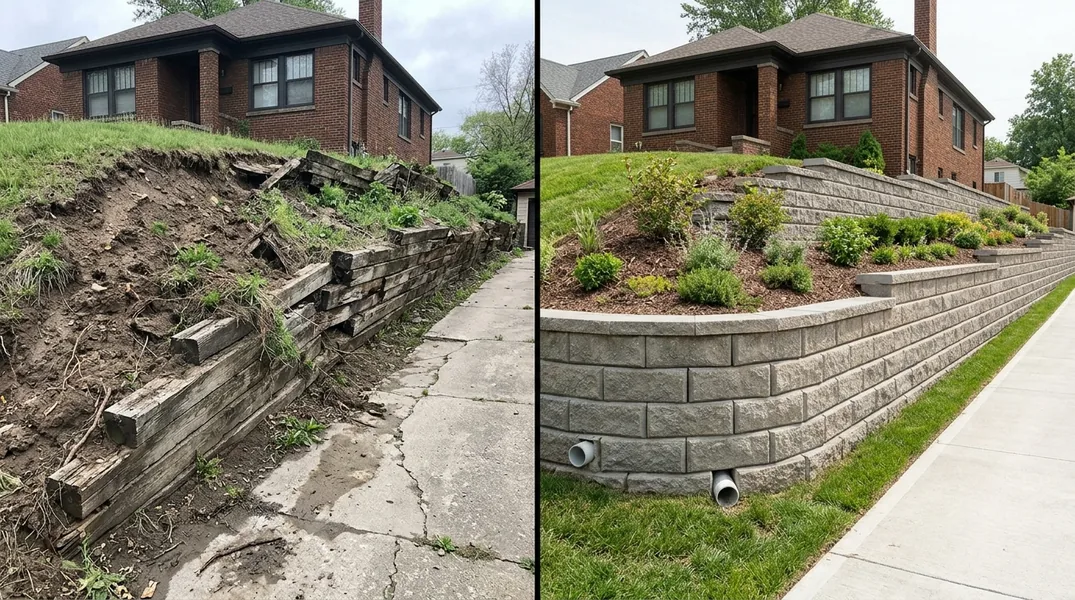
Understanding Detroit's Challenging Soil and Climate Conditions
Homeowners in Detroit face a unique set of challenges when it comes to retaining wall durability. The region's heavy clay soil, combined with Michigan's freeze-thaw winter cycles, creates conditions that can quickly compromise poorly chosen materials. During winter, water trapped in clay soil expands as it freezes, exerting tremendous pressure against retaining structures. This repeated expansion and contraction can crack, shift, or collapse walls that aren't designed with these specific environmental factors in mind.
The clay composition of Detroit area soil also means drainage is a critical concern. Unlike sandy or loamy soils that naturally allow water to percolate, clay holds moisture, creating hydrostatic pressure behind retaining walls. This pressure intensifies during spring snowmelt and heavy rainfalls, making material selection not just a matter of aesthetics but of structural integrity and longevity. Choosing the right material for your retaining wall can mean the difference between a structure that lasts 20 years and one that requires Retaining Wall Repair within just a few seasons.
Concrete Retaining Walls: Durability and Strength for Michigan Winters
Concrete Retaining Walls are a popular choice for Detroit homeowners because of their exceptional strength and resistance to freeze-thaw damage. Poured concrete walls can be engineered with reinforcement and proper thickness to withstand the intense pressure that clay soil and seasonal temperature swings create. When installed correctly with adequate drainage systems and footings that extend below the frost line (typically 42 inches in the Detroit area), concrete walls provide reliable long-term performance.
The key advantage of concrete is its monolithic structure. Unlike segmented materials, a solid concrete wall distributes pressure evenly and resists the heaving and shifting that occurs when soil repeatedly freezes and thaws. Modern concrete formulations can also include air entrainment, which creates tiny air pockets that allow concrete to expand slightly without cracking when water freezes within the material itself. Proper drainage behind the wall is still essential, as even the strongest concrete cannot withstand years of hydrostatic pressure without relief. For homeowners seeking a permanent solution in challenging Detroit soil conditions, Concrete Retaining Walls offer both aesthetic flexibility and proven durability.
Block Retaining Walls: Segmental Systems Built for Stability
Block retaining walls, also called segmental retaining walls, have gained popularity in recent years as an alternative to poured concrete. These modular systems use interlocking concrete units that are stacked and often backfilled with gravel for drainage. The beauty of a block retaining wall lies in its flexibility and the way the interlocking design distributes lateral forces. Each unit is designed to work in concert with its neighbors, creating a system that can accommodate minor settling and ground movement without failing catastrophically.
For Detroit homeowners dealing with clay soil, a properly installed block retaining wall can perform exceptionally well when constructed with adequate drainage. The key is ensuring that gravel or permeable backfill is used behind the wall to prevent water accumulation, and that the base is properly compacted and level. Many modern segmental retaining wall systems include built-in drainage channels and are rated for freeze-thaw cycles. Because blocks can be individually replaced if damaged, maintenance and Retaining Wall Replacement of sections is sometimes easier than with monolithic concrete. These systems are versatile, available in various colors and textures, and can be an excellent choice for residential properties throughout the Detroit area.
Boulder and Natural Stone Retaining Walls: Aesthetic Appeal with Proven Performance
Boulder retaining walls and natural stone walls bring a timeless aesthetic to any Dearborn or Detroit property while offering solid performance in freeze-thaw conditions. Large boulders and stacked stone naturally allow for water drainage through gaps and spaces, reducing the hydrostatic pressure that can damage other wall types. The irregular surfaces and weight of stone also help resist shifting and heaving. Boulder walls are often constructed using a dry-stack method or with mortar, depending on the desired appearance and engineering requirements.
Natural stone walls have been used for centuries in cold climates, which speaks to their durability in Michigan winters. The key to success with boulder or stone retaining walls is proper base preparation and, in many cases, the addition of drainage systems behind the wall. Geotextile fabric and gravel backfill help direct water away from the wall structure itself. While these walls may require more skilled installation than some alternatives, their longevity and natural beauty make them an investment many homeowners consider worthwhile. Stone walls also tend to blend beautifully with landscaping and can increase property curb appeal while providing functional erosion control.
Retaining Wall Installation Cost in Detroit: What to Budget
The cost of Retaining Wall Installation in Detroit varies significantly depending on material choice, wall height, length, and soil conditions. Concrete retaining walls typically range from $50 to $150 per linear foot, while block walls may cost $40 to $100 per linear foot. Boulder and natural stone walls are often the most expensive option, ranging from $75 to $200 or more per linear foot, depending on stone availability and installation complexity. These figures include material, labor, and basic drainage provisions, but complex projects with poor soil conditions or significant grading challenges may cost more.
Beyond the base material cost, factors that influence pricing include the depth of excavation required, the quality of drainage installation, site accessibility, and whether reinforcement or specialized engineering is needed. A wall that must handle particularly poor clay soil or steep grades may require additional engineering and cost more than a simple, short wall on stable ground. To get an accurate understanding of what your specific project will cost, contact Detroit Retaining Wall at (313) 474-9126 or request a free estimate. Our team can assess your soil conditions, evaluate your site, and provide transparent pricing based on your actual needs rather than generic estimates.
Choosing the Right Material for Your Detroit Property
Selecting the best retaining wall material for your Detroit home requires considering both your site conditions and your long-term goals. Clay soil and freeze-thaw cycles are constants in this region, so any material you choose must be installed with proper drainage and frost-protected footings. Concrete walls offer maximum durability and strength, block walls provide flexibility and modularity, and stone walls deliver aesthetic appeal with proven cold-climate performance. Your choice should also reflect your budget, desired appearance, and maintenance preferences.
The most important step is having a professional assessment of your specific site. Soil composition, drainage patterns, wall height, and local building codes all play a role in determining the best material for your project. Detroit Retaining Wall has years of experience installing retaining walls throughout the Detroit area in challenging soil and climate conditions. Whether you're considering a concrete, block, or boulder wall, our team can guide you toward the material and design that will serve your property reliably for decades to come. Call (313) 474-9126 today to discuss your project and schedule a consultation, or visit our website at https://detroit-retaining-wall.com to learn more about our services.
Looking for a professional retaining wall contractor in Detroit? Detroit Retaining Wall responds fast for all your retaining wall needs.
Get a Free QuoteOur services: Retaining Wall Installation · Retaining Wall Repair · Retaining Wall Replacement